
‘We have a shared sky and stars’: the Indigenous American artists challenging our relationship to the natural world
As the largest display of Native North American art ever seen in Britain arrives in Yorkshire, its artists are asking timely questions about their history, our planet, and humanity’s place within it
Hold to This Earth, the largest exhibition of contemporary Native North American art to be shown in Britain, arrives as the United States gears up to commemorate the 250th anniversary of the Declaration of Independence. Selected from Santa Fe’s Tia Collection, its artists represent more than 35 tribal nations, offering a counterpoint to that colonialist history. Their work explores a continent whose beliefs and traditions date back not centuries but millennia, and whose more recent past is marked by its original people’s exploitation, their experiences too often buried or ignored. Perhaps above all, though, “the work is incredibly timely”, as the show’s curator, Sarah Coulson, points out. “These artists are dealing with pertinent issues now.”
Many artists tackle present-day concerns head-on. Yatika Starr Fields’s sculptures, for instance, use tents salvaged from an encampment of thousands of demonstrators fighting the Dakota access pipeline that threatened the water supply of the Standing Rock Sioux. Politics mixes with pop culture and global tradition in another new commission, a huge vessel by the ceramicist Diego Romero. It has a palette that recalls ancient Greek pottery, but its celebratory comic book-style characters are drawn from an old sci-fi movie about Mayans going to space.
While many of those featured turn to traditional ways of making art, their work evades easy classification. The show’s star turn, for instance, Jeffrey Gibson, is renowned for exploring Native American struggle with a fusion of Indigenous dance, music and dress with club culture references and a DayGlo palette. The title of the exhibition is drawn from Defend Sacred Mountains, a series of text-based monoprints by the artist and activist Hock E Aye Vi Edgar Heap of Birds, and one connecting thread through its hugely diverse offering is the artists’ special awareness of our relationship to the natural world.
The artists address how our extractive profiteering relationship with the Earth can be reassessed. How Indigenous people live with it
A physical connection to the soil is deeply felt in Rose B Simpson’s giant Aztec mother goddess, who grasps what she is literally made from: raw clay. Raven Halfmoon’s dark and light figure, referencing the sun and moon, looks as if it’s been crafted from the densest primeval mud, and draws on the Caddo origin story of their people emerging from an underground realm. “Artists address how our extractive profiteering relationship with the Earth could be reassessed,” says Coulson. “How Indigenous people live with it in parity.”
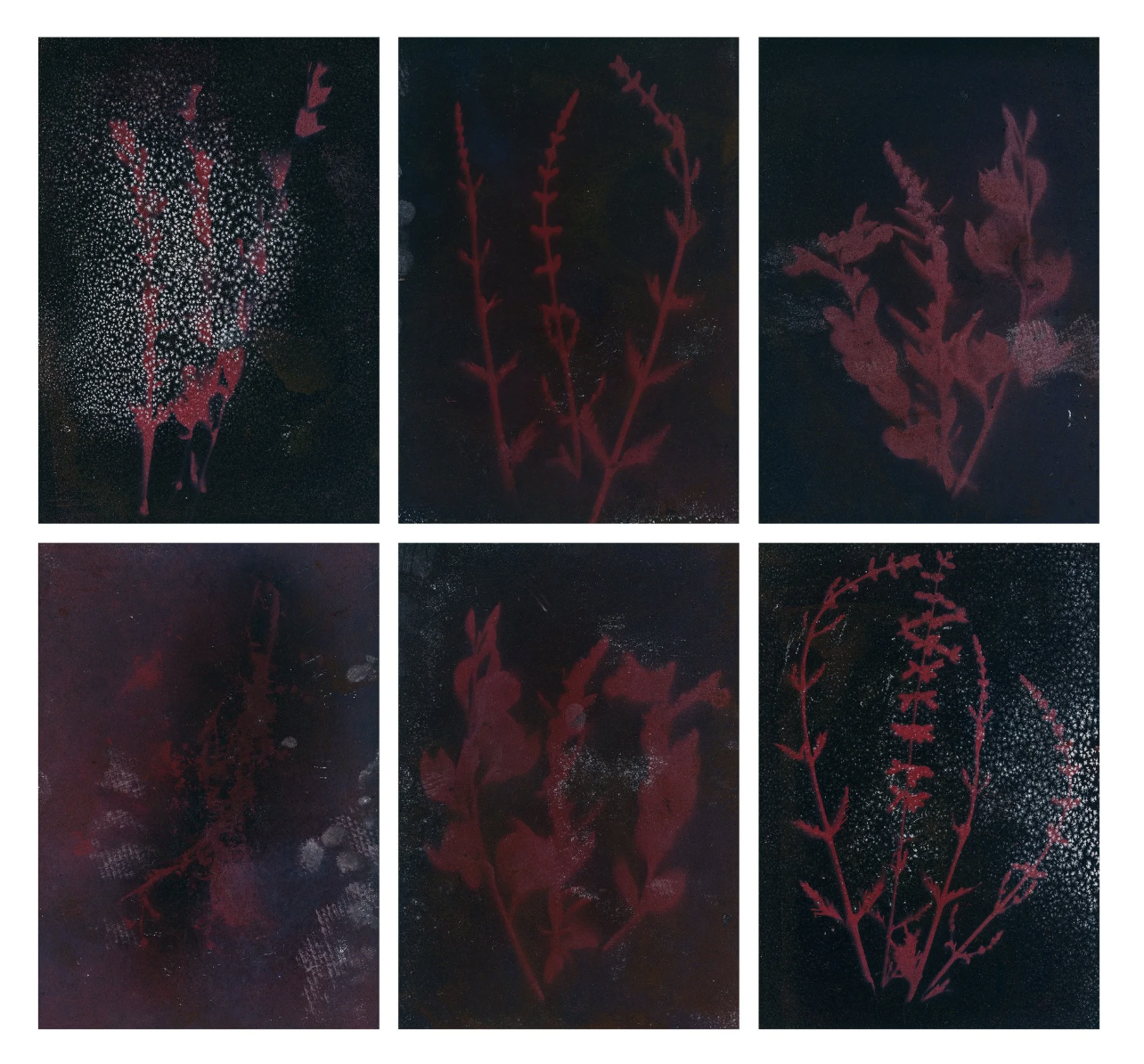
Underlining that this is a show that transcends geography, Dakota Mace’s new commission began not across the Atlantic, but in the Yorkshire countryside. The artist has collected oak galls to make an ancient dye, plus clay and sheep wool from the grounds of the Yorkshire Sculpture Park. These she has combined with similar materials from her home in Wisconsin to create cyanotypes – cameraless photographs, in which objects are placed on photosensitive paper – that make up a huge, four-metre-plus abstract work. Mace’s fusion of geographically disparate materials and craft traditions are a reminder, perhaps, of the other ways our histories are interwoven.
Another commission – from the artist Hock E Aye Vi Edgar Heap of Birds – comprises a circle of place signs carrying the names of the eight tribes to whom the mountain Bear’s Tipi is sacred, a site now desecrated by rock climbing and scramble bikes. His temporary signs are a reminder of land rights as well as that we are all the brief custodians of a common planet. As he has said, we have a “shared sky and stars”.