
Teejop Community Art Project Site Tour & Gathering
The Madison Arts Commission (MAC) is pleased to announce the opening of the Teejop Community Art Project.
Seven Indigenous artists were commissioned to develop art installations that honor and illuminate the rich cultural history of Madison as part of the area known as Teejop (pronounced day-JOPE), which means Four Lakes. The project aims to create public art that will engage with themes developed by Teejop-area Ho-Chunk community members who met for many years to carefully consider the locations and values included in this project.
The selected artists include Gene Delcourt, Lightning the Earth New Rider, Chloris Lowe, Dakota Mace, Melanie Tallmadge Sainz, Christopher Sweet, and June Whitehorse.
This project was generously funded by the Madison Community Foundation with additional support from the City of Madison, the Evjue Foundation, Friends of the Madison Arts Commission, and American Family Insurance and is being administered by the Madison Arts Commission.
Opening Celebration: Sunday, August 9, 2-4 p.m., UW Arboretum, 1207 Seminole Highway, Madison, WI 53711
Indigenous People’s Day Celebration, Thursday, October 8, 5-8 p.m., Madison Children’s Museum, 100 N. Hamilton St., Madison, WI 53703
Closing Celebration: Friday, November 6, 5-7 p.m., Edgewood University in the Stream Art Building, 1000 Edgewood College Drive, Madison, WI 53711
“The art in this project sits on land steeped in history. These are the places where your children go to school, where you gather at parks and beaches, where you meet to make decisions that shape our future. The exhibition is temporary, as most things are. The invitation to deepen your relationship with this place is not. I hope visitors to this outdoor exhibition leave with a stronger appreciation for Teejop and all it gives us. This is a good opportunity to enjoy the natural beauty of the land, mounds, springs, and lakes, and to commit to their care so they can continue to provide for those who come after us.” — Ho-Chunk Nation President Jon Greendeer
“Madison is home to many Ho-Chunk people, who have been stewards of this land since time immemorial. The Teejop Community Art Project is a collaboration, many years in the making, on themes chosen by the Ho-Chunk community. This is a unique opportunity to see place-based art installations by Indigenous artists, and to appreciate and celebrate the vitality of their work.” — Mayor Satya Rhodes-Conway
Site #5: UW Arboretum Teejop Community History Theme: Land
“This land is sacred. Its energy and abundance have sustained Wąąkšikra from time immemorial. It sings to our community and transforms all who listen.”
Artists: Melanie Tallmadge Sainz (Hoocąk) and Lightning the Earth New Rider (Hoocąk), Hazac Mąą (English translation: Earth Shelter)
Hazac Mąą is a three-dimensional temporary mixed media sculpture designed with cultural and historical connections to the land and legacy of the Arboretum site in Teejop. This project represents a collaboration of Ho-Chunk artists Melanie Tallmadge Sainz (founding Director of Little Eagle Arts Foundation – LEAF) and her son (in the Ho-Chunk way) Lightning the Earth New Rider. Lightning is a new and emerging visual artist and a skilled maker of ciipodoke (also known as a wigwam form) and hazac (temporary shade or ramada form) frames made with tamarack or maple saplings. Lighting created the hazac frame of foraged saplings. The frame is covered with bark and hand-made cattail mats woven by Melanie Tallmadge Sainz, Lightning, and invited community members who want to learn the process. Inside of the form is a variety of images created on small mats constructed of cattail and/or bulrush along or paper made from cattail.
Artist: Dakota Mace (Diné), Tsé’ Bahane’ (installation delayed until 8/15)
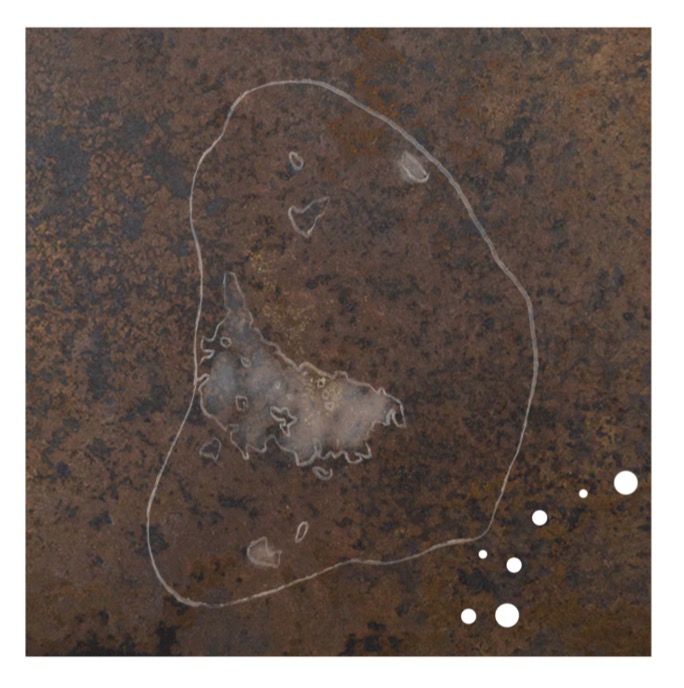
Dakota Mace’s artwork is created to possess multiple incarnations, one of which is an auditory piece activated by natural elements and its audience. It comprises a series of twenty copper plates, each measuring twelve inches by twelve inches. These plates illustrate narratives about stars, creation, and personal recollections, functioning as idiophones; each perforation emits a distinct ringing tone. The plates also depict the mapping of significant constellations from various nations, as well as stone stories collected from different lakes across the United States. Furthermore, the plates will incorporate drawings of these “seeing stones,” which will fragment over time as the sound plates weather, reflecting the way Indigenous stories gradually become integrated into the land.